Understanding high anion gap metabolic acidosis means
High anion gap metabolic acidosis describes an acid-base disorder where acids accumulate in the body faster than they can be cleared. The result is a drop in serum bicarbonate and a lower blood pH, with an anion gap that becomes elevated because unmeasured acids are present in the bloodstream.
This pattern matters because it points to an underlying metabolic derangement rather than a simple breathing problem. In many cases, the cause is obvious from the clinical presentation, but in others the trigger is hidden and only shows up after a careful laboratory evaluation.
Typical signs include an acidotic state with low bicarbonate, compensatory hyperventilation, and evidence of acid accumulation. The anion gap is especially useful because it helps distinguish types of metabolic acidosis and narrows the differential diagnosis. When the gap is elevated, clinicians often think about lactic acidosis, ketoacidosis, renal impairment, toxic ingestion, or medication toxicity.
How an Anion Gap Calculator helps identify the problem
An Anion Gap Calculator is a practical method for rapidly checking whether serum electrolytes indicate an elevated anion gap. It uses key values such as sodium, chloride, and bicarbonate to show patterns that may suggest an electrolyte imbalance or a more serious acid-base disorder.
Although the calculation is basic, it can be very helpful at the bedside or during chart review. A unexpectedly high gap may point toward drug-induced acidosis, toxic alcohols, lactic acidosis, or ketoacidosis. This is especially important when the cause is not immediately clear from the history.
For example, a patient may have nonspecific symptoms and only mild changes in the serum electrolytes at first. Using an Anion Gap Calculator helps identify the elevated anion gap early, which can prompt faster testing, closer monitoring, and more focused clinical reasoning. In other words, it supports the differential diagnosis before the situation progresses.
The calculator does not take the place of medical judgment, but it can inform the next step in laboratory evaluation. If the bicarbonate level is low and the gap is increased, clinicians often move on to blood gas testing, lactate measurement, ketone testing, and a search for medication-related causes.
Drugs most often linked to high anion gap metabolic acidosis
A number of medications are recognized for causing high anion gap metabolic acidosis, either directly or indirectly. The main ones include metformin, salicylates, isoniazid, and linezolid. Each may produce a different metabolic pattern, but they may all cause acid buildup and a rising anion gap.
Metformin is among the most well-known contributors because it can be associated with lactic acidosis, especially when there is renal failure or additional types of reduced clearance. Metformin-related acidosis is more common when kidney function is compromised, when there is severe illness, or when another contributor to tissue hypoxia is present.
Salicylates, like aspirin, can cause a combined acid-base pattern. Initial effects may feature respiratory alkalosis, but with NAGMA causes significant toxicity, the patient may present with an elevated anion gap and metabolic acidosis due to acid accumulation and lactate accumulation. Salicylate toxicity is a textbook example of medication-induced acidosis that can look more confusing than expected.
INH can cause major toxicity and seizures in excess intake, and the resulting metabolic strain may lead to lactic acidosis. It is vital to keep in mind isoniazid when there is drug overdose or changed consciousness with an gap.
Linezolid is a further medication associated with metabolic disruption, particularly through extended use. It can impair mitochondrial function and lead to lactic acidosis, especially in susceptible patients. This is a clear case of drug-induced acidosis that may develop gradually rather than abruptly.
These medications do not produce the same level of acidosis in all patients. Risk depends on dose, treatment duration, kidney function, comorbid illness, and medication interactions. Even so, when the anion gap is elevated, these agents should be high on the list.
Various drugs and exposures that can elevate the anion gap
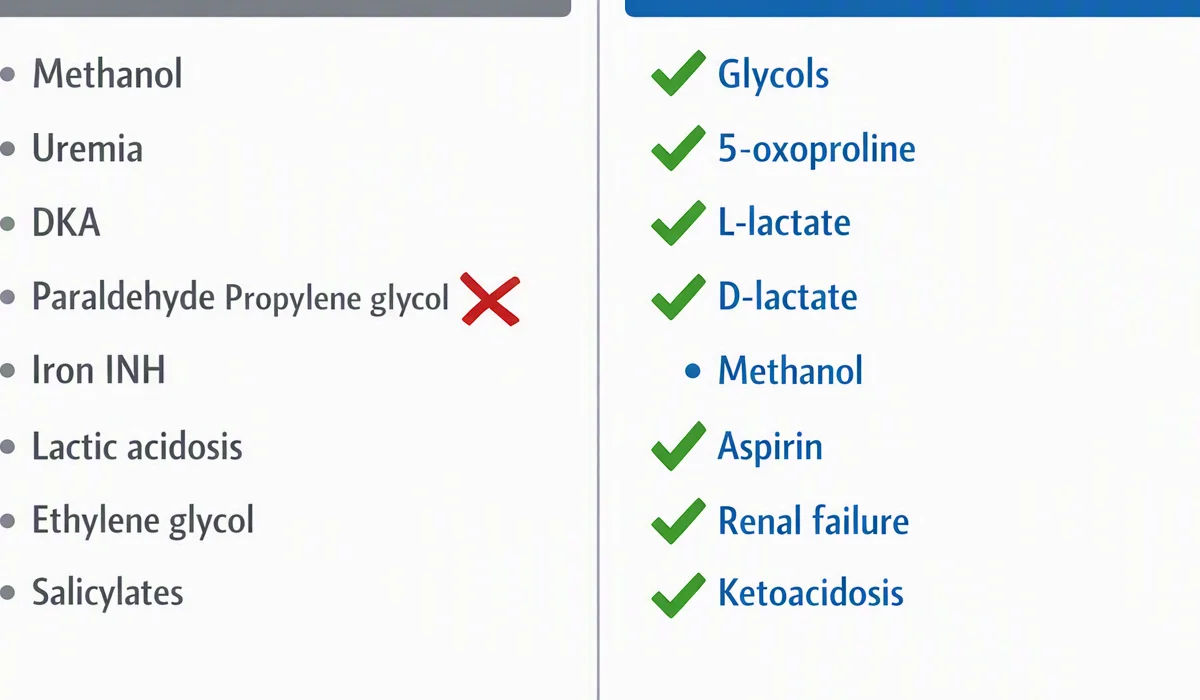
Beyond the most common drugs, several exposures and substances can elevate the anion gap and cause a dangerous acid-base disorder. They include ethylene glycol, methanol, propylene glycol, and acetaminophen.
Ethylene glycol and methanol are common toxic alcohols. They are readily absorbed and processed into acidic compounds that elevate the anion gap. Ethylene glycol is often associated with renal injury and crystal-related damage, while methanol can cause severe generalized toxicity and visual symptoms. In either case, toxic ingestion should be considered when the acid–base picture is severe or unexplained.
Propylene glycol is frequently overlooked because it is included in some IV medications and preparations. High amounts can cause raised interactive delta ratio calculator anion gap metabolic acidosis, especially in very ill patients or those receiving lengthy administration. The symptoms may mimic other causes, so it often needs careful laboratory testing and medication review.
Acetaminophen is frequently utilized and generally well-tolerated at usual doses, but overdose can lead to substantial chemical complications. Sometimes, a dangerous metabolite called 5-oxoproline can contribute to high anion gap metabolic acidosis, especially in patients with associated risks such as poor nutrition or chronic illness. That is one reason medication overdose should consistently be considered when the lab pattern is unusual.
Whenever these agents are present, the anion gap may be one of the earliest clues. For that reason an Anion Gap Calculator can be an effective starting point, but not the final answer. The overall clinical picture is important, especially if toxic alcohols or other toxic ingestion exposures are suspected.
How these medications cause acidosis
Such medications and toxic agents trigger acidosis through multiple overlapping pathways. One of the most typical is lactic acidosis, where lactate builds up faster than the body can remove it. This may occur with metformin, linezolid, severe salicylate toxicity, or other states that impair oxygen use and energy production.
Another mechanism is ketoacidosis. Although often associated with diabetes or starvation, medication effects can play an indirect role by worsening appetite, causing vomiting, or promoting a catabolic state. When ketones rise, the anion gap increases as acid collects in the bloodstream.
Mitochondrial toxicity is especially important with drugs like linezolid and, in some contexts, metformin. If mitochondria cannot use oxygen efficiently, cells shift toward anaerobic metabolism, which drives lactate buildup and an acidotic state.
Renal failure also is highly important because the kidneys normally excrete acids and clear many drugs. When renal impairment is present, medication toxicity can become more pronounced, and acids are retained longer. This is one reason drug-related high anion gap metabolic acidosis is more likely in patients with chronic kidney disease or acute kidney injury.
In practice, more than one mechanism may be present at the same time. A patient with medication toxicity may have lactic acidosis, ketones, and impaired clearance all contributing to the same elevated anion gap. That is why the diagnosis often depends on the broader laboratory evaluation rather than one result alone.
Symptoms that may point to medication-induced acidosis
The clinical presentation of medication-induced acidosis can be nonspecific, but some symptoms should prompt concern. Common signs include nausea, vomiting, confusion, and tachypnea.
Nausea and retching may indicate worsening bodily stress or poisonous ingestion. Disorientation can arise when acid-base changes affect the nervous system, when a drug has direct toxic effects, or when severe illness is already present. Tachypnea often represents compensatory hyperventilation as the body attempts to reduce carbon dioxide and partially correct the acidotic state.
Additional signs may include fatigue, belly discomfort, lethargy, or rapid clinical decline. When symptoms are severe, the patient may appear ill enough that prompt assessment is needed before the exact cause is known. If the symptom pattern appears after starting a new medication, after a dose change, or after possible overdose, drug-induced acidosis should be seriously considered.
Clinical symptoms alone cannot confirm the cause, but they can help tie the laboratory abnormalities to the bedside picture. That pairing is what makes the diagnosis more actionable.
When lab results need prompt clinical attention
Specific laboratory findings should trigger immediate alarm, especially when they present with a high anion gap and a alarming clinical presentation. Helpful tests include an arterial blood gas, lactate, ketones, and a toxicology screen.
An arterial blood gas helps determine the severity of acidemia and whether respiratory compensation is present. A high lactate supports lactic acidosis, while elevated ketones point toward ketoacidosis. A toxicology screen may assist detect medication overdose or confirm a toxic ingestion when the history is unclear.
Concern increases when the bicarbonate level is very low, the blood pH is significantly depressed, or the patient has altered mental status, persistent vomiting, or signs of shock. The same is true if toxic alcohols are suspected, since ethylene glycol and methanol require rapid treatment.
In patients with kidney disease, the threshold for concern should be even lower. Renal impairment can worsen medication toxicity and slow recovery, making prompt recognition crucial. If the lab pattern suggests drug-induced acidosis, clinicians should not wait for all results before starting supportive care and targeted treatment.
A practical approach is to combine the Anion Gap Calculator with a careful review of medications, recent dose changes, possible overdose, and any exposure history. That strategy can shorten the path from abnormal labs to the right diagnosis.
Frequently asked questions about medication-related high anion gap acidosis
Medication-related high anion gap metabolic acidosis is a complex issue, and the answer is not usually as simple as naming one medication. A careful medication review, focus on kidney disease, and awareness of drug interactions can change the differential diagnosis quickly. The key is to match the lab pattern with the clinical presentation and decide whether urgent medical evaluation is needed.
Which medications are most commonly associated with high anion gap metabolic acidosis?
The most frequently mentioned medications include metformin, salicylates, isoniazid, and linezolid. Other causes include acetaminophen in select cases, as well as exposures to toxic alcohols such as methanol and ethylene glycol. The exact risk depends on dose, underlying illness, and renal function.
Can metformin cause high anion gap metabolic acidosis?
Yes. Metformin can cause high anion gap metabolic acidosis, usually through lactic acidosis. The risk is higher in people with renal failure, severe infection, dehydration, or other causes of impaired oxygen delivery or drug clearance. A rising lactate level and low bicarbonate are important clues.
Do salicylates and aspirin raise the anion gap?
Yes. Salicylates, including aspirin, can raise the anion gap in significant toxicity. They often create a mixed acid-base disorder, and the pattern may include tachypnea, nausea, vomiting, and altered mental status. Blood gas testing and a toxicology screen can help confirm the concern.
How do toxic alcohols like methanol and ethylene glycol affect the anion gap?
Methanol and ethylene glycol are toxic alcohols that are metabolized into acidic substances, which increases the anion gap. Methanol can cause severe systemic toxicity, while ethylene glycol is associated with renal injury. Both are medical emergencies and should be considered when toxic ingestion is possible.
When should someone with suspected medication-induced acidosis seek urgent care?
Urgent care is needed if there is confusion, severe nausea or vomiting, fast breathing, collapse, or a known or suspected medication overdose. A very abnormal blood gas, high lactate, positive ketones, or concern for toxic alcohol exposure also warrants immediate medical evaluation. If kidney disease is present, symptoms and lab abnormalities should be taken even more seriously.
Bottom line: an high anion gap is an important indicator, not a complete diagnosis. Relying on an Anion Gap Calculator in combination with serum electrolytes, blood gas results, lactate, ketones, and a thorough medication history can help detect high anion gap metabolic acidosis quickly and point to the correct cause.